
WHO WE ARE
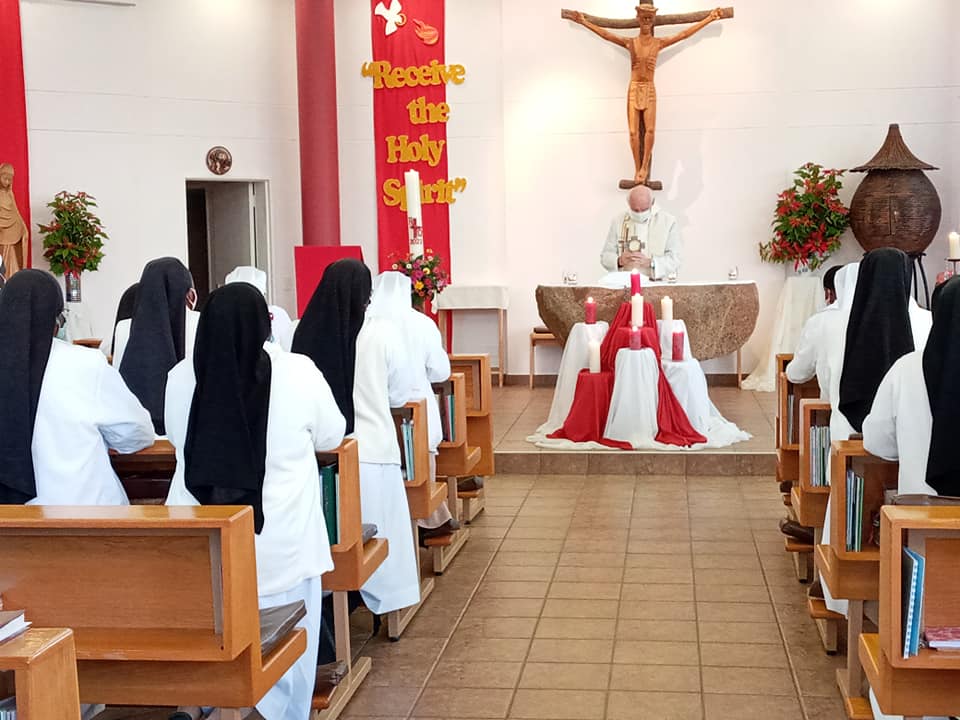
The beginning of the mission services of the Missionary Benedictine Sisters of Tutzing in Namibia started after eight sisters arrived on 20th December 1920. They spread the Catholic faith in a country where Christ was not yet sufficiently known. Their first job in Gobabis and Epukiro was to meet the people and try to learn their languages. Then they planted fruit trees, did gardening for their vegetables, looked for children and tried to get them into kindergartens or schools, talked to the parents about teaching their children how to read and write, and helped the people when they became ill.
These first sisters were:
- 1. Sr. Beatrix BIEFEL, OSB – Superior
- 2. Sr. Sophia OHMACHT, OSB
- 3. Sr. Anselma SCHNITZBAUER, OSB
- 4. Sr. Franziska MÖVENKAMP, OSB
- 6. Sr. Ingridis MEILLER, OSB
- 7. Sr. Gabriella REITER, OSB
- 8. Sr. Relindis BESSINGER, OSB
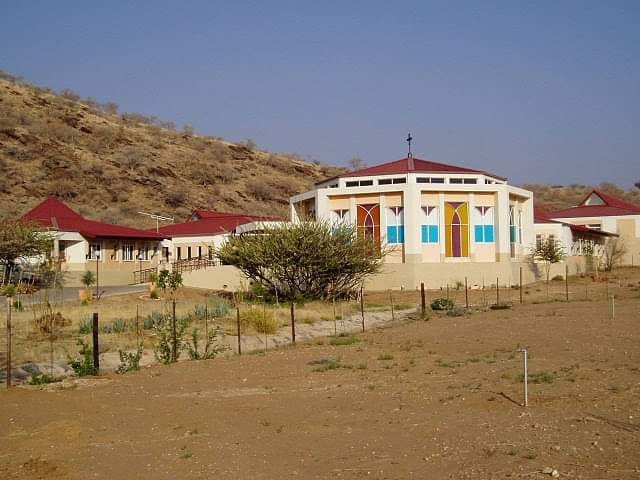
Initially, the Tutzing Sisters came due to the urgent need for new Missionary Sisters to Namibia after World War I. The only female congregation in the Prefect of Windhoek at that time was the Franciscan Sisters of Nomenweth, who were recalled by their Generalate to leave “Maria Hilf Hospital” in Windhoek, today called the Roman Catholic Hospital. Fr. Eugene KLAEYLE, the Apostolic Prefect, and Fr. Damian ARNOLD, his representative in Namibia, looked for another Sisters’ Congregation to take over the hospital and other mission stations.
Our History Continued
In 1921, another group of sisters arrived and served in the school in Klein Windhoek known as St. Paul’s College until 1969.
The next group of Tutzing Sisters that arrived in 1922 was divided: some settled in Swakopmund, and some went to Nyangana Mission in Kavango.
In Swakopmund, they worked tirelessly to develop St. Antonius Hospital in order to care for the sick. The hospital became very famous in the whole town of Swakopmund.
However, as many sisters grew old or passed away, the remaining ones were no longer able to manage it. The hospital was closed in 1985, and the building has now been converted into an old age home known as Antonius Residence.In Nyangana, the Tutzing Sisters visited the people in their homes and often found very sick individuals. To alleviate this, they established the first hospital in Kavango as well as a school at the mission.
Due to a lack of personnel, the Tutzing Sisters decided to hand over the Nyangana community to the Missionary Helpers of Würzburg, and the Tutzing Sisters left Nyangana in 1976.
In 1923, the sisters went to Andara Mission, where they taught in a primary school with hostels for both girls and boys, and carried out health services at Andara Hospital until the year 2000.
Since April 1923 to the present, the Tutzing Sisters began their service in the Roman Catholic Hospital as its second administrators. They provided the hospital with every necessary resource, both human and capital.
On 26 June 1926, the Tutzing Sisters in Namibia were well developed, and Rome allowed them to erect their community to a Priory level, which came to be known as St. Benedict Priory, Windhoek, with Mother Agatha ROSS, OSB as its first Prioress.
In 1927, the first Tutzing Sisters arrived at Oshikuku Mission and established St. Martin Hospital. Seeing the need for auxiliary nurses, the sisters opened a training school for enrolled nursing assistants in 1933.
Other communities that benefited from the Tutzing Sisters’ services are:
Swakopmund Werft Community (1922–1950)
Windhoek Werft Community (Pionierspark) (1924–1969)
Anamulenge Community (1932–1983)
Cuchi Community in Angola (1932–1975)
Serpa Pinto Community in Angola (1972–1975)
Subiaco Community in Windhoek (1989–1998)
Today, the Tutzing Sisters serve in 14 communities within the three Roman Catholic dioceses of Namibia:
Archdiocese of Windhoek
Diocese of Keetmanshoop
Vicariate of Rundu
Through their continued presence, they are spreading the Gospel of Jesus Christ to all strata of Namibian humanity.